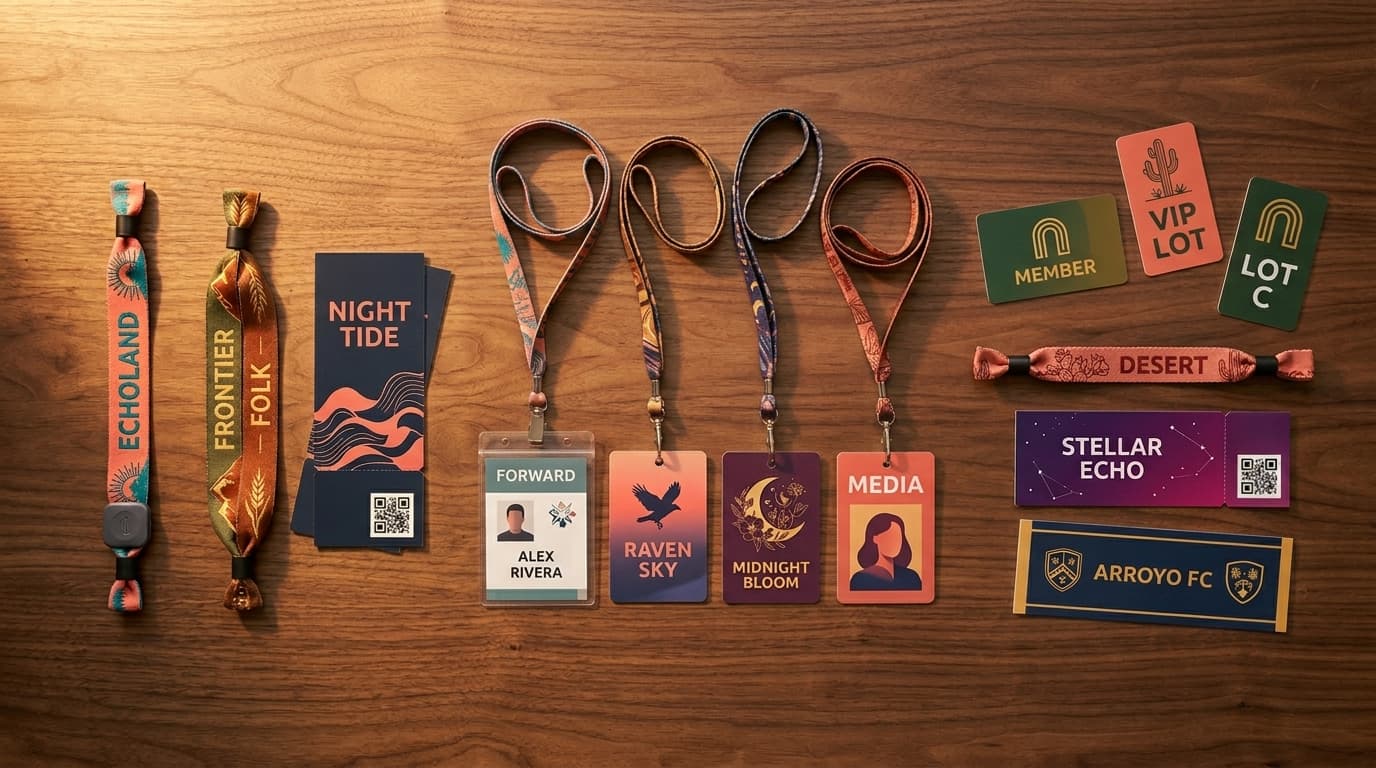
Saturday in summer. Three operators. Same problem.
A festival promoter is running two events on the same weekend. Different lineups, different venues, different fulfillment partners. Both inboxes are surging.
A performing arts center is running three shows tonight. A touring Broadway production in the main hall. A children's matinee that just let out of the theater. A corporate gala loading in to the rooftop ballroom. Three audiences in the same building. Different will-call desks. Different parking validation. Different policies on what's allowed inside each room.
A conference organizer is running three regional summits the same week, different cities, all hitting registration confirmation panic at the same time.
Three operations. Three industries. Same shape.
All three are running a portfolio of distinct experiences under one operational roof. And all three know deep down that their help text doesn't quite cut it.
The experience industry runs on portfolios
Almost no one in this space runs just one thing.
Festivals run multi-event weekends and multi-festival seasons. Venues host a different audience every night. Sports teams have regular season, playoffs, special events, season-ticket holders, and single-game buyers. Conference organizers run multi-track events, regional tours, and the same conference year after year. Touring entertainment hits dozens of venues with different rules at every stop.
If you're in operations leadership at any of these companies, your real job isn't running one event. It's running a portfolio of them.
The tools you use should know that. Most don't.
Each experience is its own world
Every event has its own rulebook. The rules apply while the event is live, and they don't carry over to the next one.
The bag policy at this venue isn't the bag policy at the next one. The will-call procedure for tonight's show isn't the procedure for tomorrow's. Event A and Event B on the same night route separate crowds to different lots, each with its own driving directions. The VIP sponsor handling tonight's hospitality isn't the sponsor handling tomorrow's. The on-site contact for the conference in Nashville isn't the on-site contact for the conference in Austin.
That's not a bug. That's the actual shape of how the experience industry operates.
The problem is what happens when all of that information lives in one shared knowledge base, behind one shared chatbot, routed through one shared queue. Your AI confidently tells the wrong guest the wrong thing. Your support team can't tell at a glance which event a ticket belongs to. Your escalation routes to whoever happens to be on duty, not the right vendor. The information bleeds across events, and when it bleeds, your guest experience cracks.
This is what most helpdesks were built for: one company, one product, one knowledge base. SaaS makers, not portfolio operators.
The workaround tax
When you take a helpdesk built for one product and try to make it run a portfolio, you pay a tax.
It looks like this:
Tagging hierarchies layered three deep to scope which content shows to which guest. Custom fields stacked on top of custom fields to route by venue, event, audience, brand. Conditional automations that branch on tags and break when someone renames a tag. Separate help centers per brand, usually only available on the Enterprise plan. Manual knowledge base versioning every time policy changes. Specialty admin hires who know how to keep the whole stack from collapsing. Weeks of setup every time you add a new event to the calendar.
You see this on your invoice and you see it on your team's calendar.
It's the platform admin you wouldn't otherwise need to hire. It's the premium subscription tier you upgrade to just to get multi-brand support. It's the second AI tool you bolt on because the helpdesk's bot can't be trained per event. It's the hours your operations leads spend writing the same answer eighty times because the tool can't scope content properly. It's the rollout that takes two weeks instead of two hours because every new event needs another round of tagging discipline.
The cost is real. It just doesn't show up on the line items.
What built-in actually looks like
A platform built for the experience industry treats this differently. The portfolio shape isn't a configuration challenge. It's a foundational structure.
That means an Events hierarchy that lives in the database, not in your tagging discipline. Per-event knowledge bases without buying separate help center licenses. Per-event AI training that doesn't bleed across events, because the AI knows which event a guest is asking about and answers from the right knowledge. Per-event escalation routing that routes guests to the right gate at the right time for the right event. Per-event sentiment and operational intelligence so you can see a surge happening at one specific event before it spills across your whole operation. Native data isolation between brands so a vendor working your festival can't see tickets from your venue side.
Setup is measured in minutes, not weeks. Adding a new event isn't a tagging project. It's a few fields in a form.
One subscription. Not five tools stitched together with workflows you'll inherit and curse three years from now.
How this plays out across the experience industry
Same architecture, different shape, depending on what you run.
Festival promoters. Each event in a multi-event weekend has its own surge, own peak, own context. Each tour stop in the season has its own knowledge. The Midwest stops aren't the Southeast stops. Generic tools force you to either run them as one big bucket and accept the bleed, or maintain parallel configurations that drift apart over the season.
Venue and arena operators. Each calendar slot is a different audience. The hockey crowd isn't the concert crowd. The graduation isn't the trade show. Different parking rules, different concessions, different bag policies, different staffing. Your support tool should know what's happening in your building tonight and answer accordingly. Most don't, which is why arena GMs end up sending blast emails before every event reminding guests to "please disregard the bot."
Sports teams. Home games versus away games. Regular season versus playoffs. Season-ticket holders versus single-game buyers versus suite holders. Different routing, different tone, different urgency, different vendor relationships. Conferences and concerts in your stadium need their own scope too. None of that fits a flat ticket queue, and the support volume in modern sports operations isn't getting smaller.
Conference organizers. Each track has different attendees. Each city in a multi-city tour has different logistics. Each annual return has new sponsors, new content, new floor plans. Your support tool needs to know which conference, which year, which track, which city before it answers an attendee's question. Otherwise you're sending the 2024 hotel block code to a 2026 registrant. Conferences also tend to peak hard in the two weeks before the event, which is exactly when your team has the least bandwidth to maintain a fragile tagging system.
Touring entertainment. Every city is a different venue with different rules. Per-stop knowledge is the only thing that scales. The on-site contact in Cleveland isn't the on-site contact in Phoenix. Tagging your way through this works until it doesn't, usually right when you need it most.
The structural problem is the same. The tool to solve it should be too.
Architecture is the cost lever you don't see
When operations leaders evaluate support platforms, the comparison usually focuses on features. Does it have AI chat. Does it have email deflection. Does it integrate with our ticketing platform.
What rarely gets compared is architecture. And architecture is where the real cost lives.
A platform that handles the portfolio shape natively saves you admin headcount you wouldn't otherwise hire. It saves you the premium tier you'd pay just to get multi-brand support. It saves you the second and third tools you'd bolt on for AI, knowledge, and analytics. It saves you the weeks of setup every time you launch a new event. It saves you the fragility that hits when you need your tools to work most, on the surge weekend, at the gate, when the question volume is at its peak.
That's the lever. It doesn't show up in feature comparisons. It shows up in your budget, in your calendar, and in how often your operations team is fighting their tools instead of running their events.
Stop configuring around your tool's limits
The experience industry runs on portfolios. Helpdesks that pretend otherwise force operators to spend more time configuring software than improving guest experience.
ASQR was built around the actual structure of how this industry operates. Brands and events as first-class concepts. Per-event AI, knowledge, and escalation by default. One subscription. Setup in minutes. Closed-loop learning that improves your AI from real conversations across every event in your portfolio. The full picture of why this matters lives in our pillar post, What Is a Guest Intelligence Platform.
If you're running more than one experience under your operational roof, you shouldn't have to fight your tool to make that work.
See how ASQR's architecture handles your portfolio. Explore the platform features or book a 20-minute demo.
Ready to turn guest support into guest intelligence?
See how ASQR helps live events organizations understand their guests better.