500 guests just asked the same question. Now what?
Maybe your fulfillment partner dropped the ball. Maybe will-call instructions that were supposed to go out Monday morning were never sent. By Wednesday afternoon, your support inbox has 500 messages from guests asking some version of the same question: "How do I pick up my tickets?"
Your team jumps in. They start tagging tickets to the event. Categorizing by topic. Searching for the right macro. Chasing down your fulfillment partner for a definitive answer they can actually send. By the time they work through half the queue, 200 more have come in.
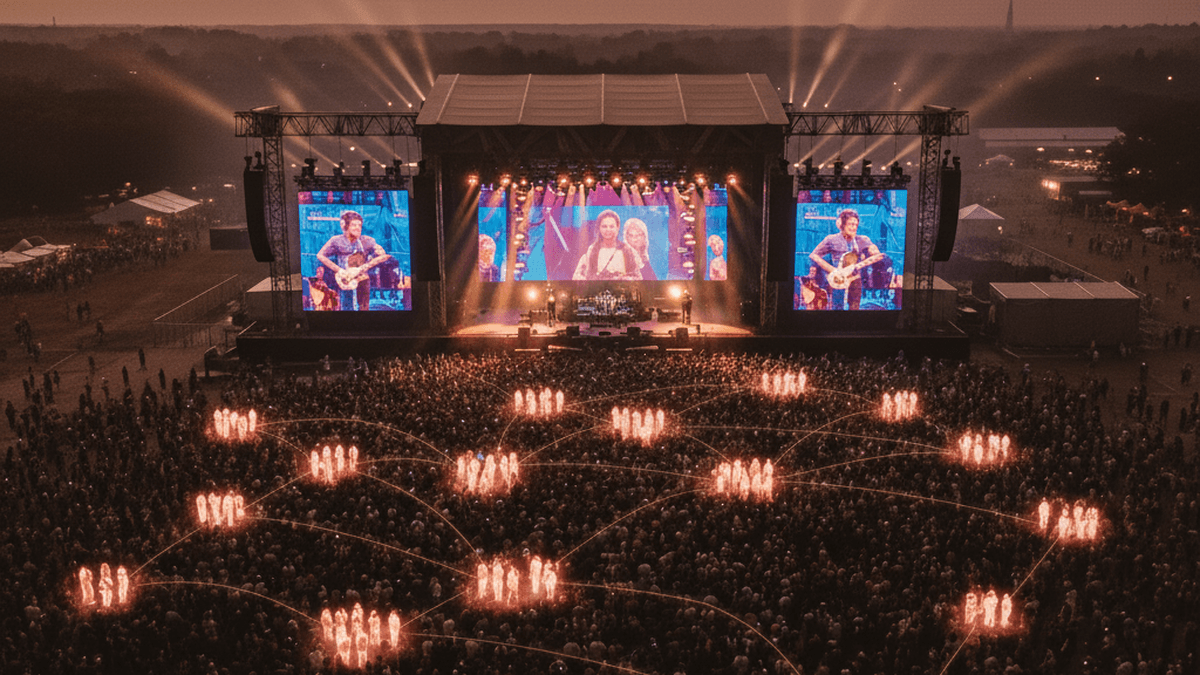
This scenario plays out every festival season. The specific question changes. Prohibited items, shuttle schedules, lineup changes, last minute cancellations + transfers. But the pattern is always the same: a small handful of topics generate the vast majority of your inbound volume, and your team spends more time managing that volume than learning from what it's telling you.
The 500 guests asking about ticket pickup aren't just a support queue problem. They may be telling you something your operations team needs to hear right now: you're about to have hundreds of people showing up to will-call who weren't planning to. That means parking capacity at the box office, line management, signage, and staff allocation all need to adjust before those guests arrive. The support spike is the early warning system. The question is whether your tools let you hear it.
Reducing support volume during festivals isn't about answering faster. It's about building the systems that prevent most of those tickets from being created in the first place, catching new issues the moment they emerge, and making sure the insights inside your support queue reach the people who can act on them.
Volume reduction starts before the first ticket arrives
The most effective volume reduction happens weeks before gates open. Every festival generates a predictable wave of questions in the days leading up to the event: parking directions, entry procedures, prohibited items, accessibility accommodations, schedule details, group logistics. These questions are almost entirely predictable because you've answered them before, often hundreds of times.
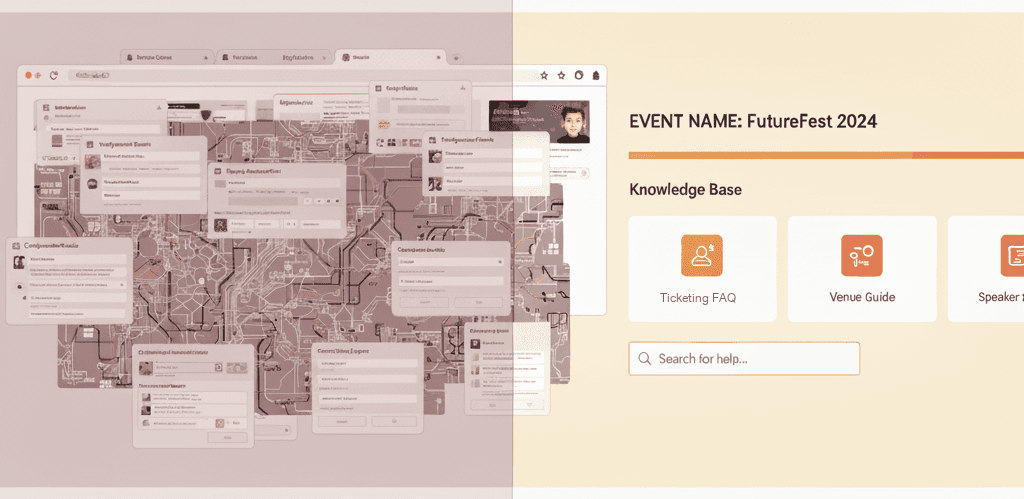
The work is assembling that knowledge into a format your AI can use. Not a static FAQ page buried three clicks deep on your website. A structured set of info scoped to that specific event, linked into a chatbot that can answer guest questions immediately through chat, email, or SMS.
Here's what makes this more than a "build a better FAQ" argument. In early Asqr deployments, over 50% of questions asked to the AI chatbot were already answered in the FAQ on the event website. Guests had the information available to them. They chose to ask anyway. People want quick, direct answers to their specific question. They don't want to scan a page of 40 questions hoping theirs is listed. If the chatbot can give them a confident answer in seconds, the ticket never gets created.
This is where year-over-year intelligence becomes a real operational advantage. A guest intelligence platform that tracks question patterns across events and seasons gives you a head start. You can see what guests asked about last year during the same pre-event window, identify which topics drove the most volume, and make sure your knowledge base covers them before this year's surge begins. You're not starting from scratch each season. You're building on what you already know.
The pre-event knowledge sprint isn't glamorous work. But it's the single highest-leverage activity for reducing festival support volume. Every question your AI can answer confidently is one fewer ticket in your queue and one fewer distraction for your team during the weekend that matters most.
Let the AI handle what it can answer confidently
Preparation only works if you have a system that can actually use it at scale. When your inbox goes from 20 messages on a Tuesday to 2,000 in 48 hours, the bottleneck isn't knowledge. It's delivery.
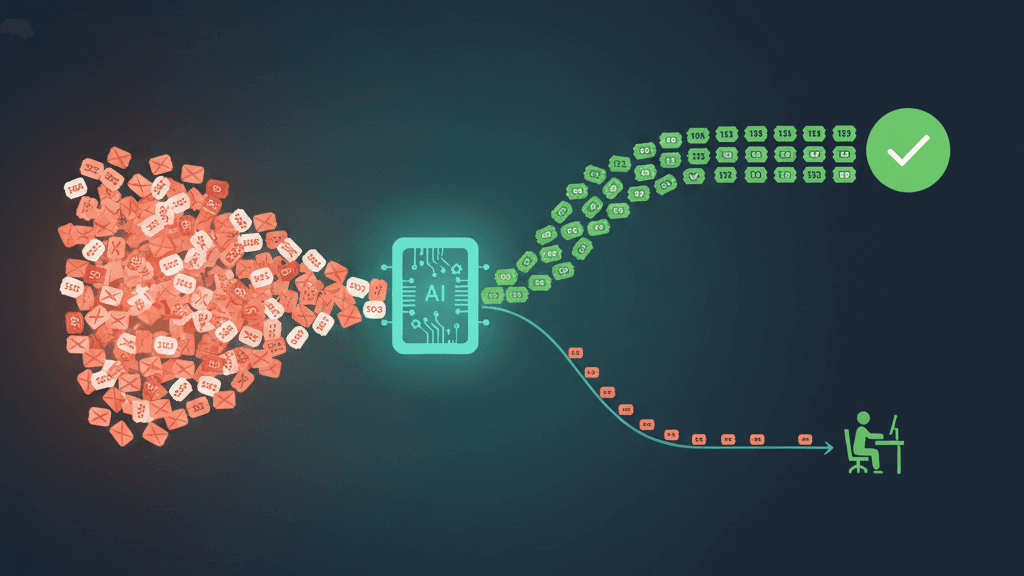
This is where AI deflection changes the math. When a guest emails in with a question, the system evaluates whether it can answer confidently before the message ever reaches an agent. If the AI has a strong knowledge base match, it sends the guest a direct answer with the option to confirm it solved their problem or connect with a human. If confidence drops below the threshold, the AI doesn't guess. It routes the message to your team with full context so they can pick it up without the guest repeating anything.
That confidence threshold is what separates useful AI from the chatbots that frustrate guests and create more work for your team. The AI isn't answering everything. It's answering the questions it actually knows the answer to, and getting out of the way when it doesn't. For the high-volume, well-documented questions that dominate pre-event and day-of support, like parking directions, gate times, prohibited items, and ticket delivery, the deflection rate compounds fast.
The same logic applies to live chat. A guest opens the widget on your festival's event page and asks about VIP entry procedures. The AI pulls from that event's specific knowledge base, not a generic help center shared across all your events. If the answer is there and the confidence score is high, the guest gets what they need in seconds. No queue. No wait. No ticket.
This isn't about removing humans from the process. It's about making sure your team's limited time during a festival weekend goes toward the conversations that actually need them: edge cases, escalations, VIP issues, and the emerging problems that only a human can judge. Every confidently-deflected question gives your agents back time they would have spent answering something the AI already knew. (For more on what makes AI chatbots work for events versus generic platforms, see AI chatbots for live events: what works and what doesn't.)
When a question you didn't prepare for starts spiking
You can prepare for every question you've seen before. You can't prepare for the one you haven't. And during a live event, new questions are inevitable. A parking lot closes unexpectedly. A food vendor changes locations. A headliner moves to a different stage. A will-call system goes down.
The moment a new type of question starts appearing, the clock starts ticking. Every minute without an answer means more tickets stacking up, more agents spending time crafting individual responses to the same question, and more guests waiting.
This is where real-time pattern detection becomes a volume reduction tool. Asqr's Action Center monitors incoming questions for emerging trends. When it detects a spike in a topic the AI can't answer confidently, it surfaces it immediately with the context your team needs: the question guests are actually asking, how many have asked in the last hour, the AI's current confidence level, and a recommended action.
The fix follows a tight loop. Your team sees the alert, writes the answer, and adds it to the knowledge base through a guided workflow that takes minutes. The AI starts deflecting those questions immediately. No retraining cycle. No waiting for a vendor. No support ticket to your platform provider.
But here's the part that really changes the workflow during a surge. Those 200 questions that came in before the AI had the answer? They're still sitting in your queue, and they all need the same response. Instead of working through them one by one, your team can filter by intent, see every ticket asking the same question, and send them all the answer at once. What would have taken an agent two hours to work through individually gets resolved in minutes.
The combination matters. Pattern detection tells you something new is happening. The quick-fix workflow gives your AI the answer. Intent-based filtering lets you clear the backlog. Together, they turn an emerging issue from a queue-clogging crisis into a contained, resolved problem. That loop, from unknown question to automated resolution, is how you reduce volume on questions you never saw coming.
Support data that becomes operational intelligence
Reducing ticket volume is the obvious win. But the more valuable outcome is what those support patterns tell you about your operation before anyone on the ground sees it.
Go back to the fulfillment scenario. 500 guests asking about ticket pickup is a support problem. But it's also a logistics problem that's about to arrive at your venue. Those guests weren't planning to visit will-call. Now they are. Your box office needs to be staffed for that volume. Your parking plan near will-call needs to accommodate the extra traffic. Your signage needs to direct people to the right location before they start wandering and creating more confusion.
A traditional helpdesk closes those 500 tickets and moves on. A guest intelligence platform surfaces the pattern, quantifies the scale, and connects it to the operational decision that needs to happen next. The support team sees a ticket spike. The operations team sees a logistics adjustment they need to make in the next two hours.
This works across every type of issue that surfaces through guest communications. When sentiment drops sharply on a specific topic mid-festival, that's not just a customer satisfaction metric. It's a signal that something changed on the ground. When questions about a specific gate cluster in a 30-minute window, something is happening at that gate. When parking questions spike three hours before doors, your pre-event communications didn't land or your lot assignments need attention.
The organizations that reduce volume most effectively aren't just answering questions faster. They're using what guests are telling them to prevent the next wave of questions from ever being asked. Fix the operational issue, update the knowledge base, push a proactive communication, and the volume drops before it builds. That's the compound effect of treating every conversation as intelligence rather than just a ticket to close. (For a deeper look at how this works, see what a guest intelligence platform actually is and why generic helpdesks can't deliver this.)
The compound effect across seasons
Every festival weekend makes the next one easier. Not because events get simpler, but because your system has already seen the patterns.
The questions guests asked last April about parking at your spring festival? Those show up as preparation recommendations before this year's event. The knowledge gap your team filled in real time when a lot closed unexpectedly? That's already in the knowledge base for next time. The operational signals your team spotted through support data, the fulfillment issue that meant will-call overflow, the gate confusion that needed extra signage? Those become part of your pre-event operations playbook, not just tribal knowledge that walks out the door when a seasonal team member leaves.
This is what it means to reduce support volume systematically rather than reactively. You're not just answering questions faster during the surge. You're building an intelligence layer that makes each event more prepared than the last. Fewer unknown questions. Faster detection when something new emerges. Better operational response when support signals tell you something is happening on the ground.
Festival support volume is never going to be zero. But the gap between organizations that drown in it and organizations that use it as an operational advantage is the system they build around it.
See how Asqr reduces support volume while turning guest conversations into operational intelligence. Explore the platform features or book a 20-minute demo.